Weekly options by stock · TTD
The Trade Desk (TTD) Weekly Options
Last TTD trade alerted Apr 14, 2025
Yes, The Trade Desk (TTD) has weekly options. They trade on US exchanges and expire every Friday the market is open, except the third Friday of each month, when monthly options expire. When a Friday is a market holiday, that week’s options typically expire on the prior trading day. Below is our fully documented track record on TTD, and how its weekly options work.
The Trade Desk (TTD) is listed on Nasdaq and based in Ventura, California.
Our documented TTD track record
Every TTD trade we have published, wins and losses alike. “Potential gain” is measured from a recorded entry price to a recorded exit price; individual results vary. We have published one TTD trade, too few to quote a win rate from, so the trade is shown instead. Past performance does not guarantee future results.
Documented TTD trade stories
A closer look at recent TTD weekly options trades we published and tracked, with the chart from the time of the trade. Wins and losses alike.

902% Potential Profit on a TTD Weekly Call Option
The Trade Desk (TTD) · published Apr 14, 2025
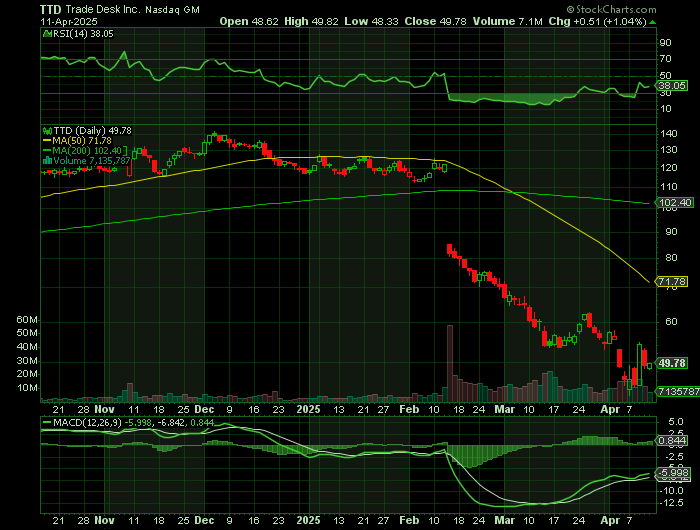
TTD May 23 2025 $55.00 CALLS
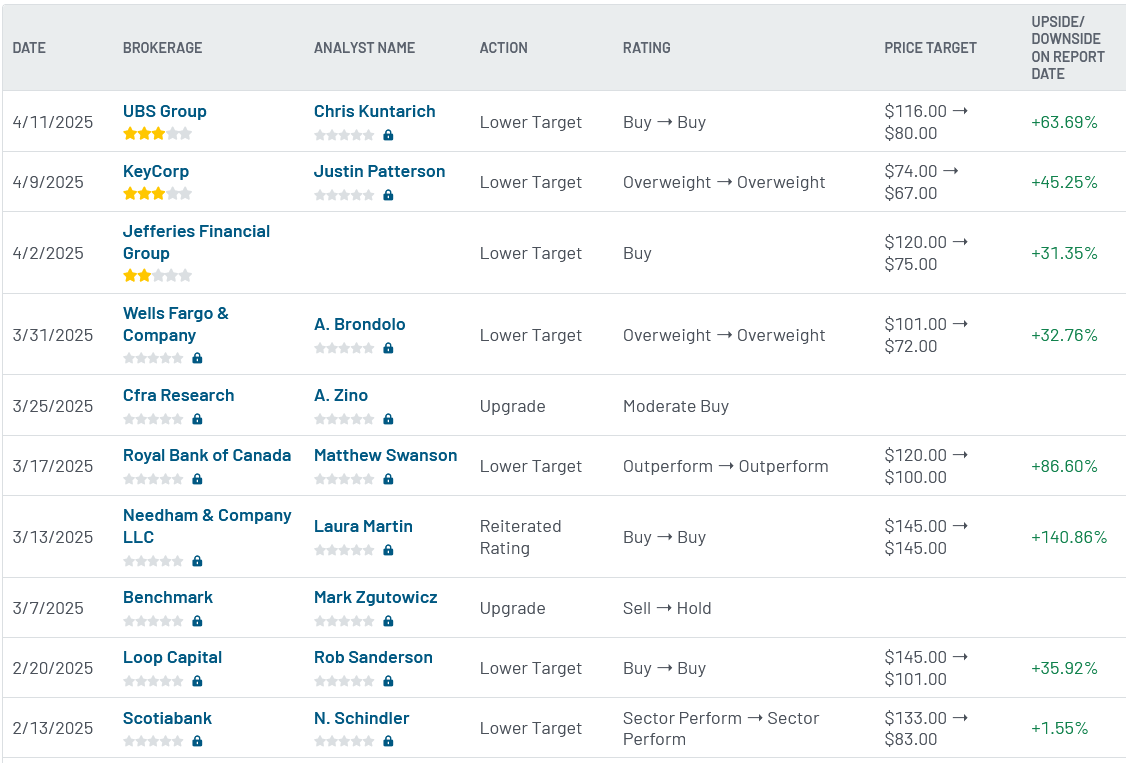
We publish and track this weekly options trade idea as a model position, tracked on paper rather than as a live trade of Weekly Options USA. Figures are the potential profit or loss on the published parameters; results vary from trader to trader. Past performance does not guarantee future results. General information, not personal advice.
See the research behind every TTD trade inside membership →Recent TTD weekly options trades
| Date | Contract | Priced from | Exit | Potential profit |
|---|---|---|---|---|
| Apr 14, 2025 | TTD May 23 2025 $55.00 CALLS | $2.52 | $25.25 | +902% |
Our TTD weekly options trading history
We published a documented TTD weekly options trade on Apr 14, 2025. Across 1 closed trade, 1 used a call option. Our best documented TTD result was a potential gain of +902% on TTD MAY 23 2025 55.000 CALLS, published Apr 14, 2025. The most recent are shown above, and every one, wins and losses, is on our full track record. Past performance does not guarantee future results.
What our TTD record shows
We have published one documented TTD position, a call alerted in 2025, and it closed at +902%. One trade is a data point rather than a pattern, so it says nothing about how TTD behaves in general. It is here because everything we publish stays published, winners and losers alike.
How weekly options work on TTD
TTD has weekly options listed, and a weekly contract gives a short, defined window to trade a specific event rather than paying for a month of time value. Whether it suits any particular trade is a question for the option chain on the day, not for one past position.
Our published TTD ideas carry entry parameters, exit guidelines and a stop, and the reasoning behind the trade, so the logic is on the page rather than implied.
TTD weekly options: common questions
Does The Trade Desk (TTD) have weekly options?
Yes. The Trade Desk (TTD) has weekly options listed on US exchanges. New contracts are added regularly and expire every Friday the market is open, except the third Friday of each month, when monthly options expire. When a Friday is a market holiday, that week's options typically expire on the prior trading day.
When do TTD weekly options expire?
TTD weekly options expire at the close of trading, 4:00 pm Eastern, every Friday the market is open, except the third Friday of each month, when monthly options expire. When a Friday is a market holiday, that week's options typically expire on the prior trading day.
What is Weekly Options USA's track record on TTD?
We have published one closed TTD weekly options trade idea, listed below with the contract, the entry and the exit. That is too small a sample to quote a win rate from. Every trade we publish, on any stock, is on our public track record. Past performance does not guarantee future results.
What are the best weekly options to trade on TTD?
There is no single best contract. The right choice depends on your position size, timeframe and risk tolerance.
Experienced traders start with liquidity, looking at the daily volume and open interest of the specific option contract, not the stock itself. A lightly traded strike can be difficult to exit at a fair price, even if the trade idea is right.
Next comes the bid-ask spread. A wide spread adds cost both when entering and exiting the position.
Then there is time to expiry. Time decay becomes increasingly important as a weekly option approaches expiration, particularly in the final days.
Finally, there needs to be a reason for the stock to move within that timeframe. Earnings, a product announcement or a significant technical level may provide a catalyst. Without one, the option can lose time value while the stock goes nowhere.
How do I trade weekly options on TTD?
Weekly options on TTD are traded through any US options brokerage, in the same account you would use for shares. Most brokers ask you to apply for options approval first. This is general information, not personal advice; you make your own decisions.
Other stocks we have documented trades on
The full list is on weekly options by stock.
Get our next TTD trade idea
Members receive researched weekly options trade ideas on TTD and other actively traded stocks, with entry parameters, exit guidelines, a stop and the reasoning behind them.
Becomes $119 a month on day 14, with $100 the first month. Cancel any time. See all plans
Weekly Options USA is a publisher of general trading research and education, not a registered investment adviser or broker-dealer. Everything we publish is general information only, never personal advice or a recommendation tailored to you, and you make your own trading decisions. Options trading carries substantial risk, including leverage, volatility, and the loss of your entire investment, and is not suitable for everyone. We guarantee no profit, accuracy or outcome. Past performance, including any results shown on this site, does not guarantee future results. Only trade with money you can afford to lose.